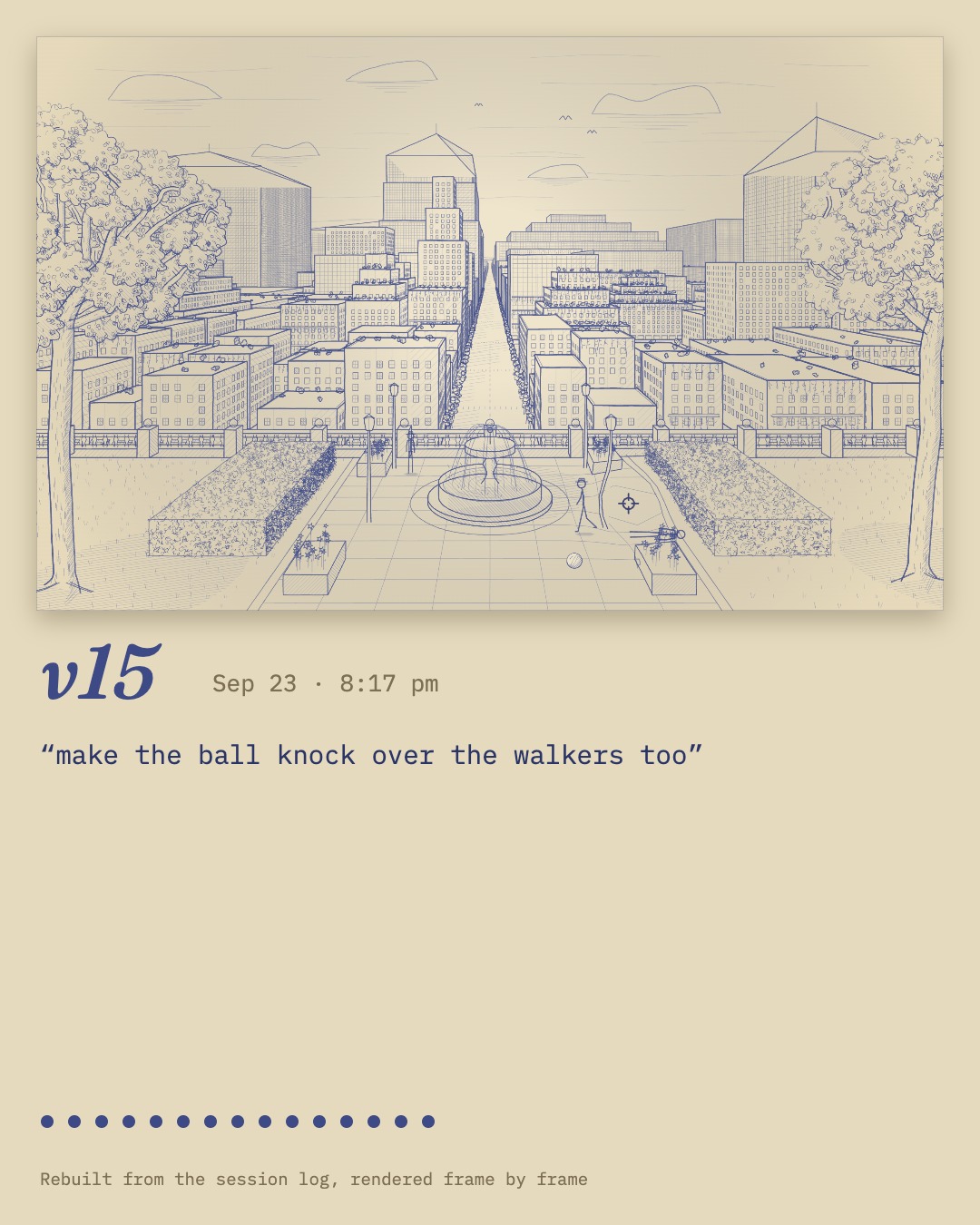
I made an ink sketch you can throw things at, and I want to talk about how it got made.
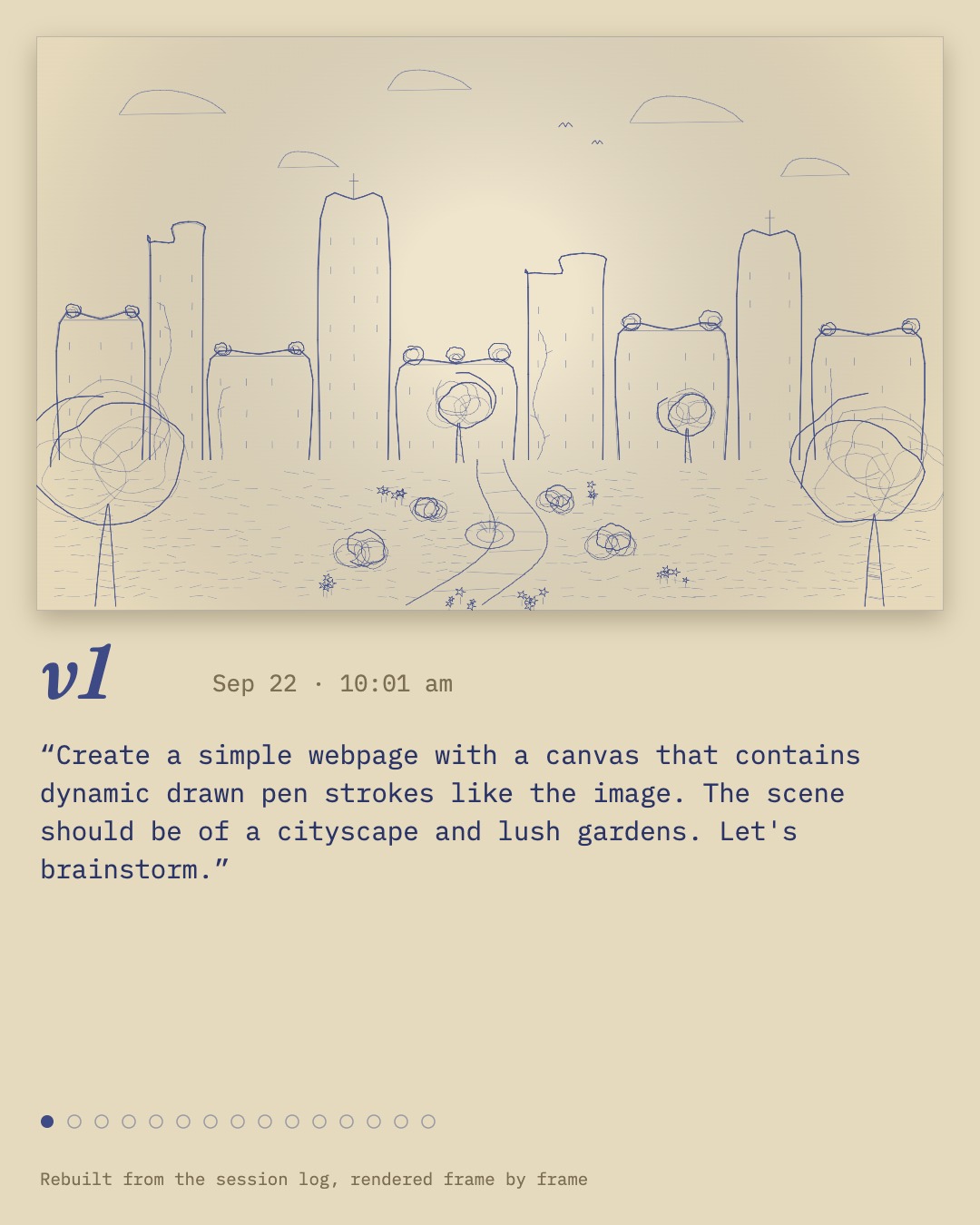
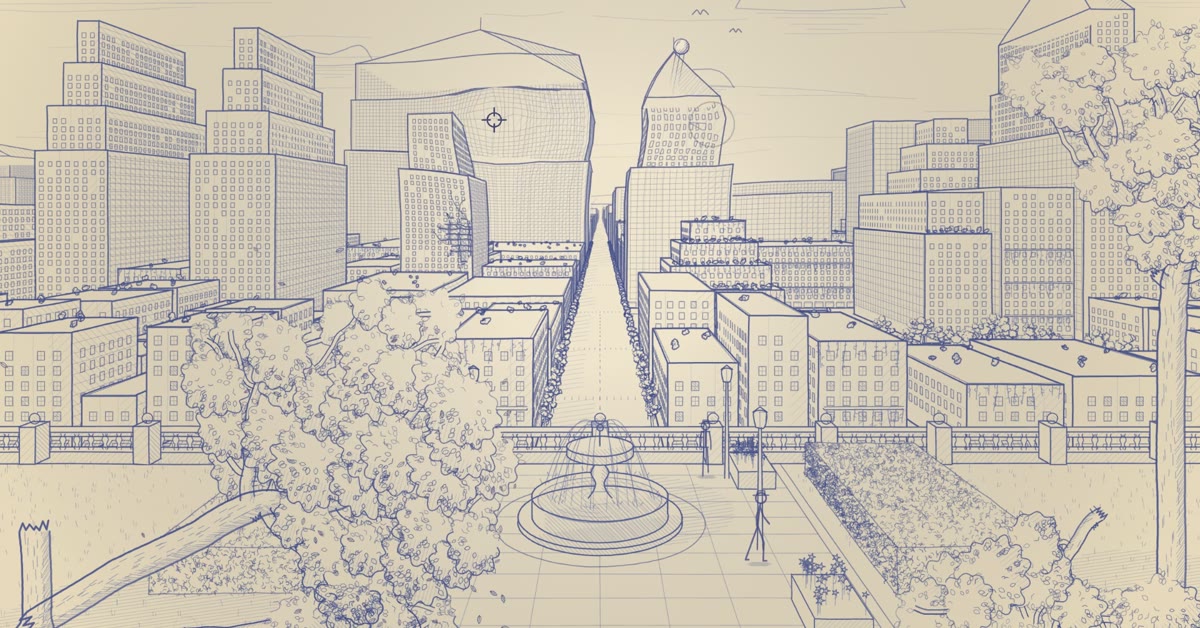
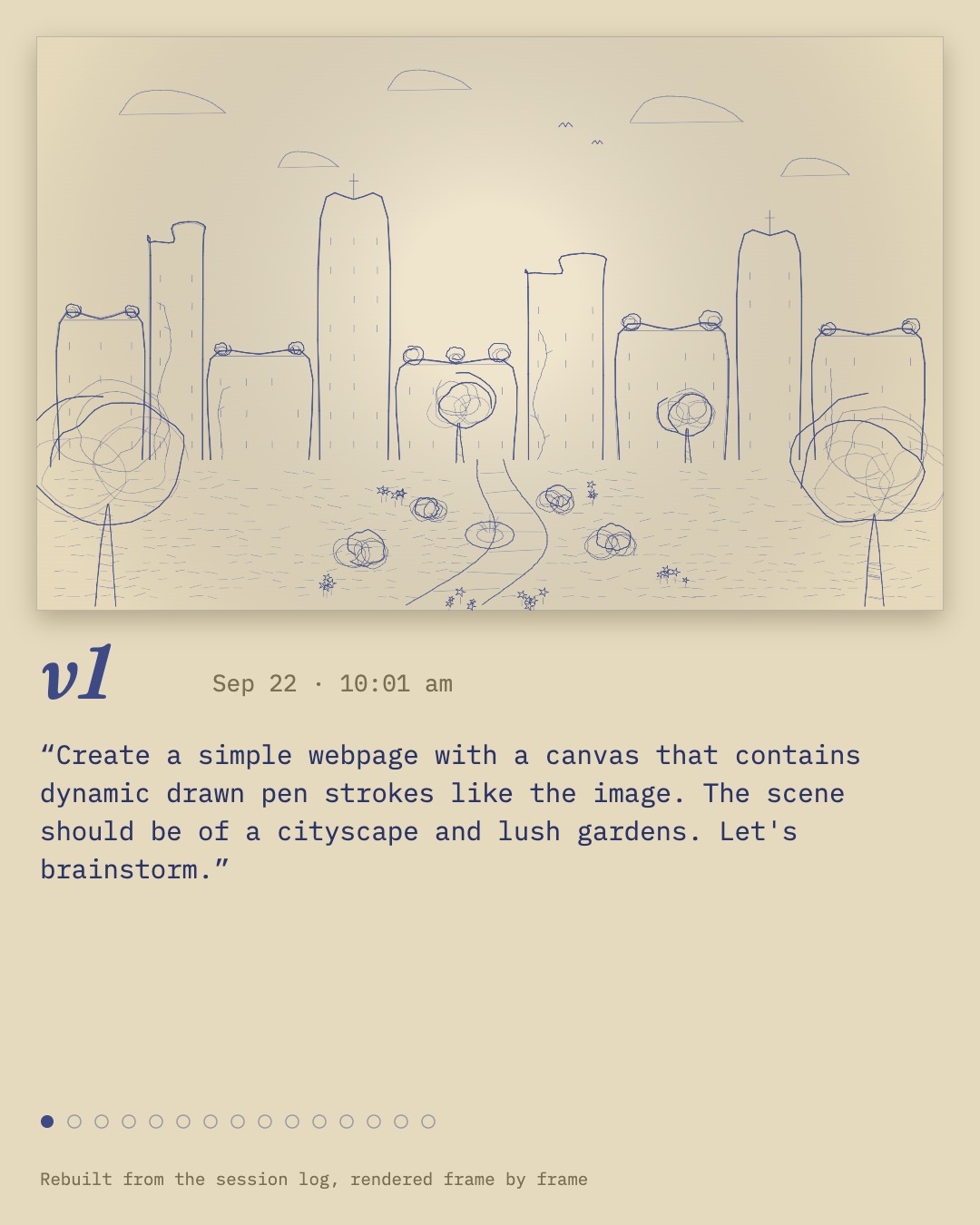
It started with a reference: a blue ballpoint landscape someone had drawn into a website footer. My first prompt asked for "a simple webpage with a canvas that contains dynamic drawn pen strokes like the image" and ended with "Let's brainstorm."
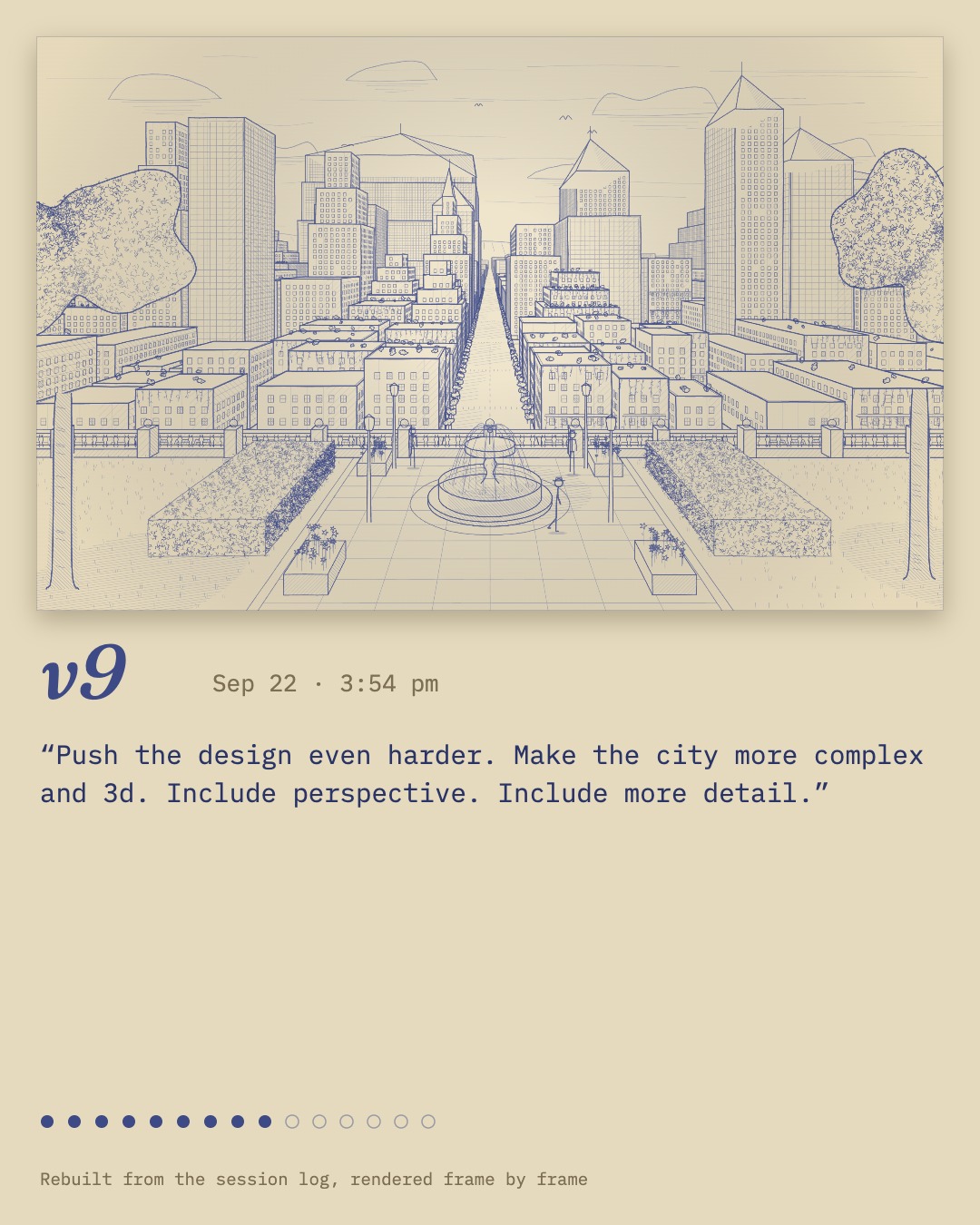
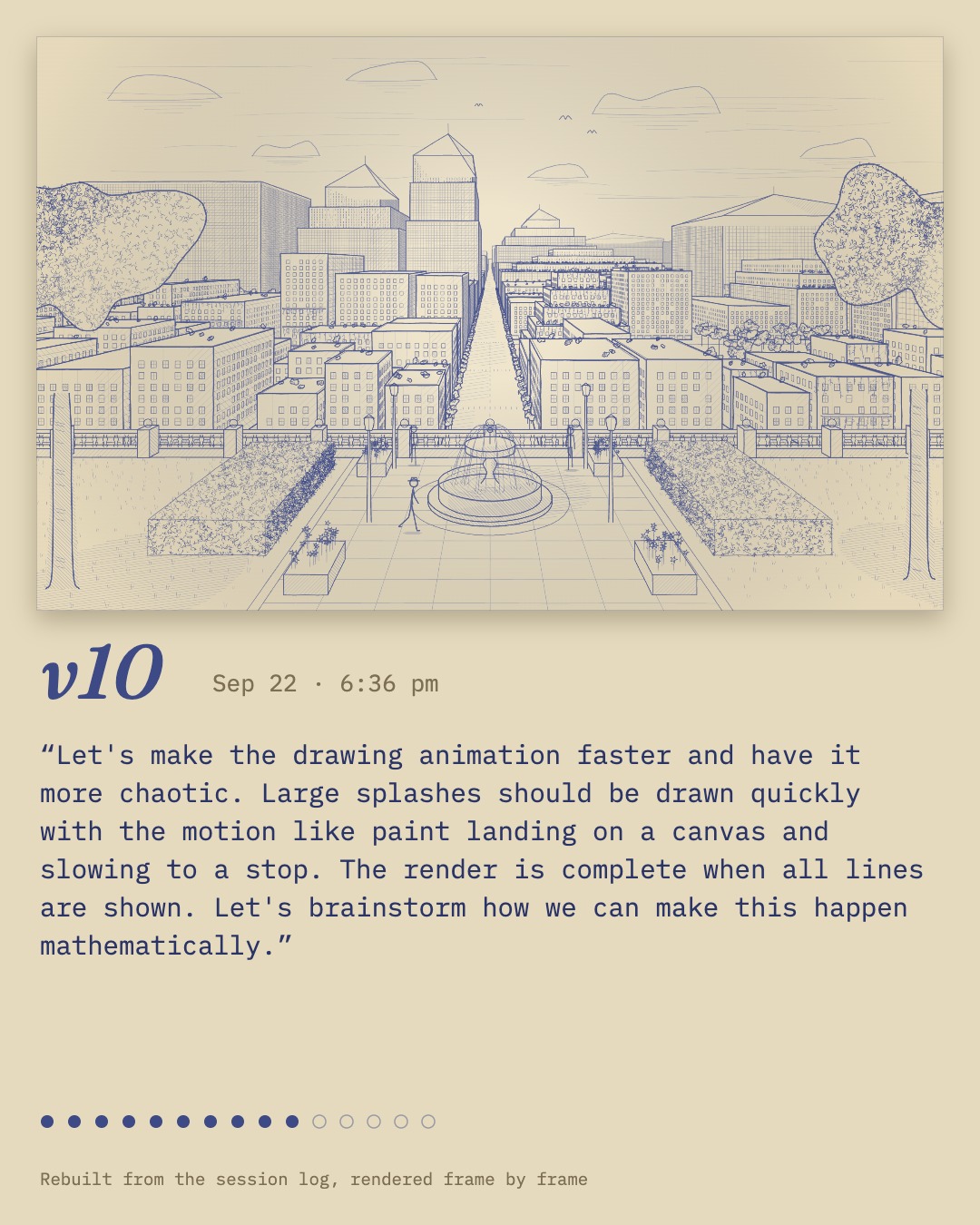
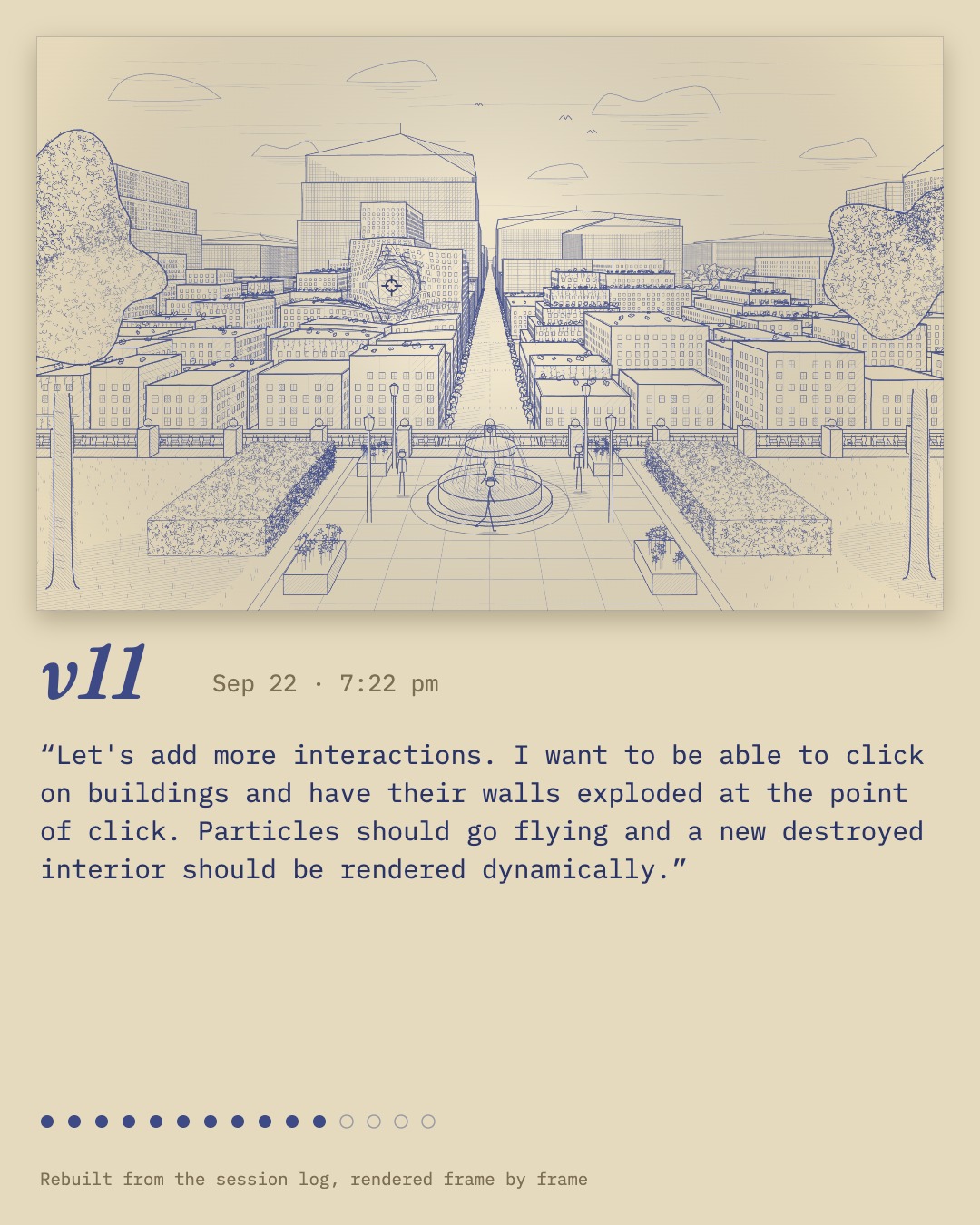
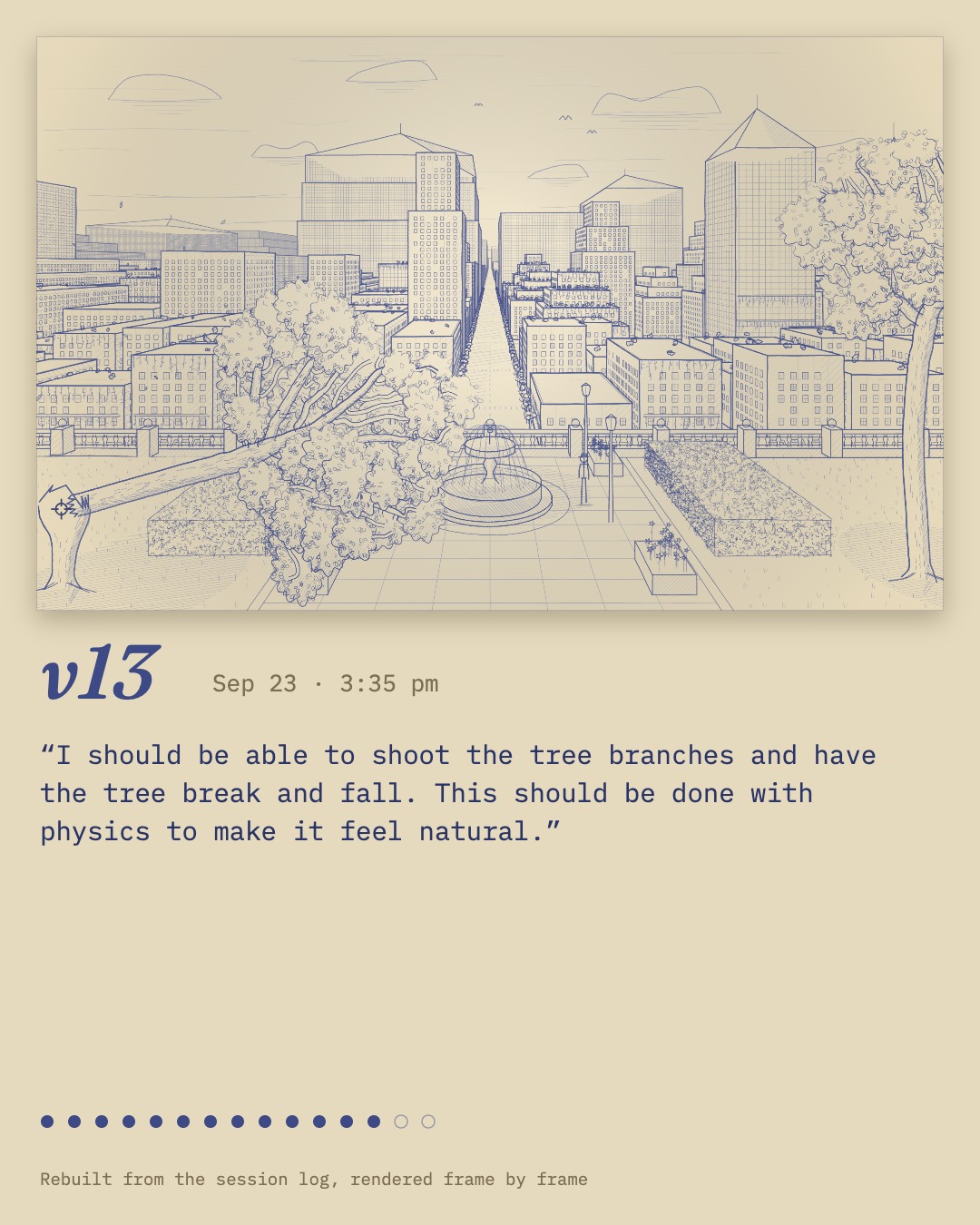
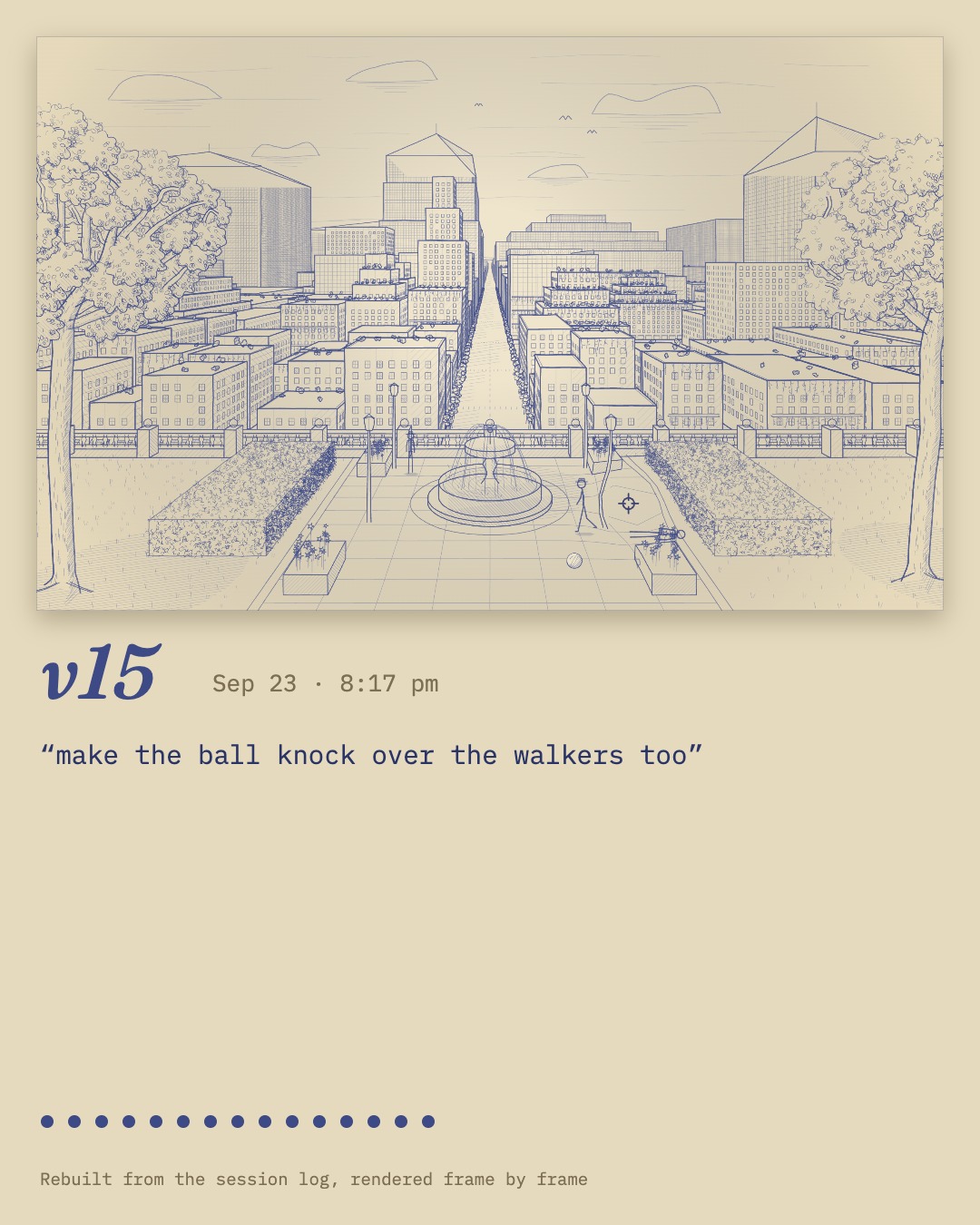
Sixteen prompts and two sittings later, it's a garden city in one-point perspective. The ink scatters around your cursor, walkers wander the terrace, and a click lobs a ball that blasts holes in walls, snaps tree limbs and knocks people over. They get back up.
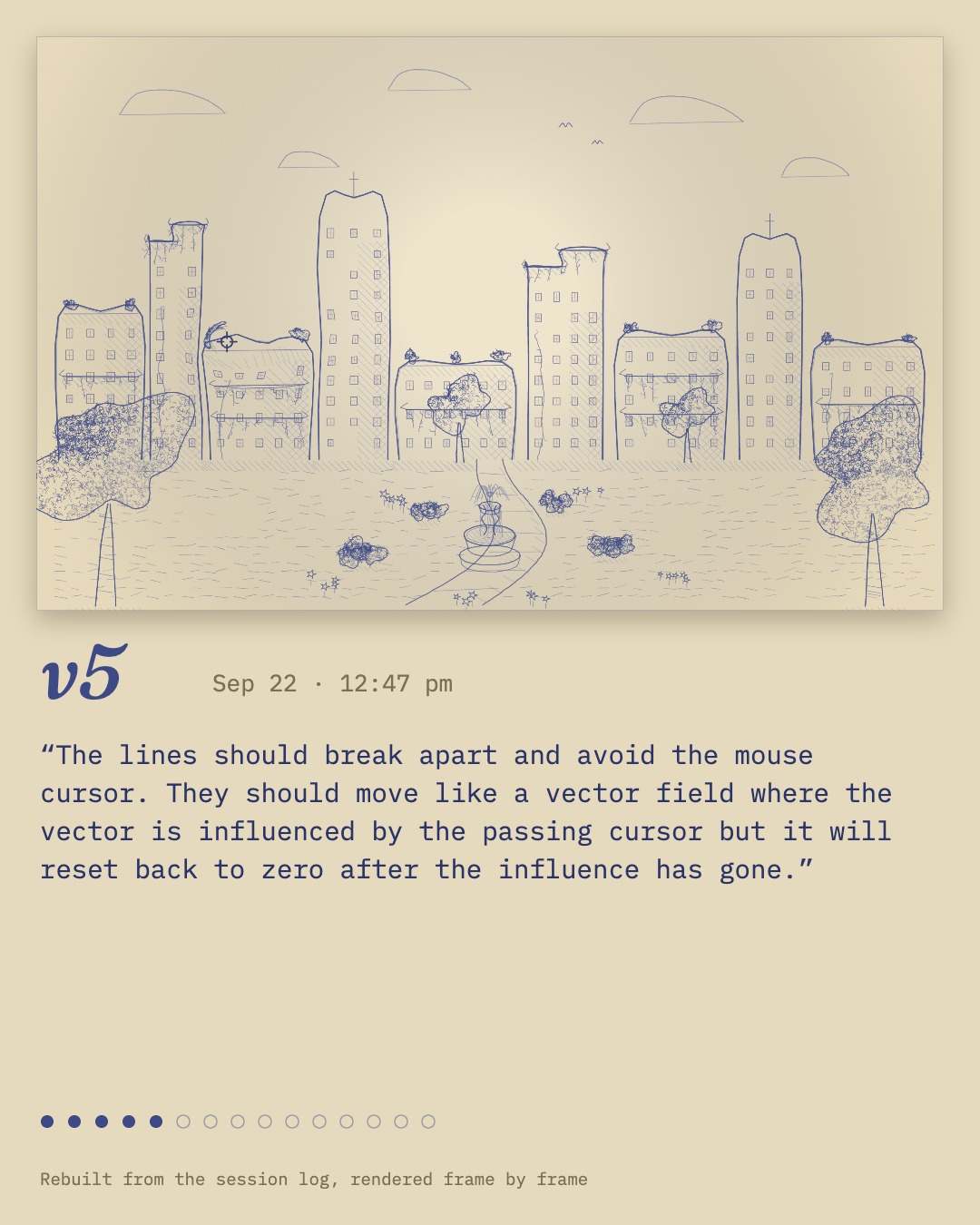
What changed is the distance between an idea and a running sketch. "The lines should break apart and avoid the mouse cursor" became working code in one turn.
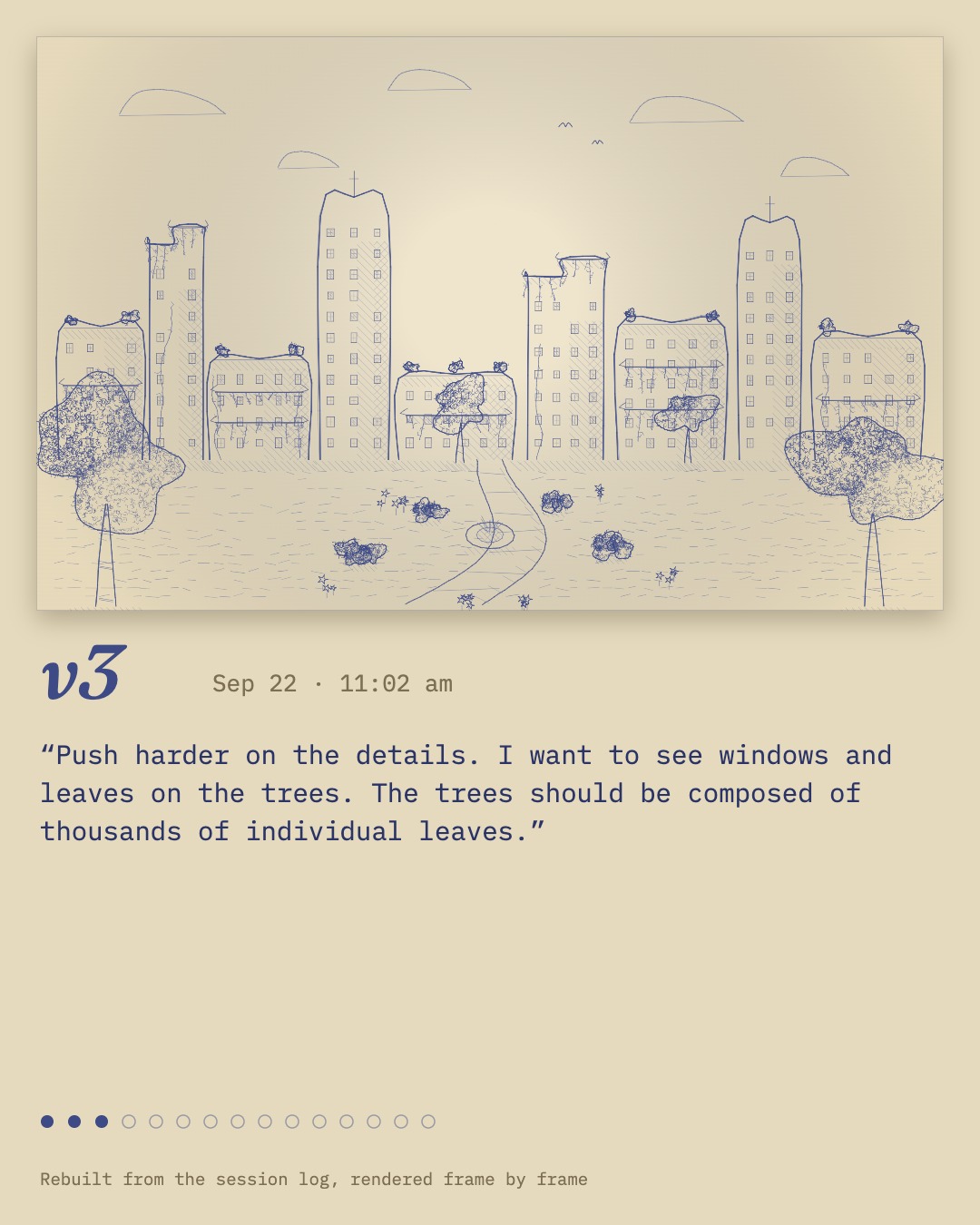
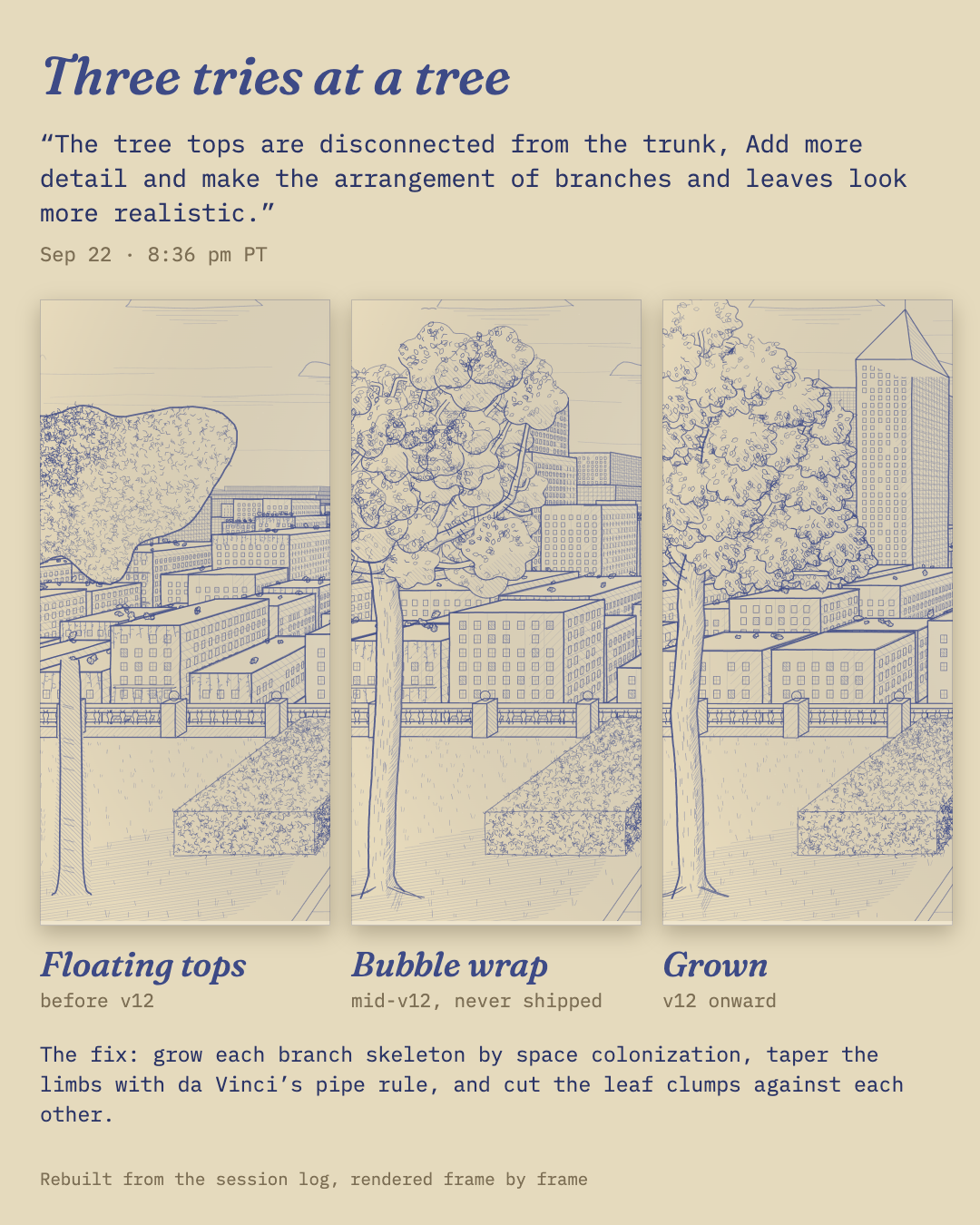
What didn't change is the loop. Look at it, react, push. My prompts were ideas and reactions, not specs: "Push harder on the details." "The tree tops are disconnected from the trunk." Taste still drives.
Then the Comfy part. I work at Comfy, so I wanted to see what happens when the recording becomes the input. We sent the same five seconds, the tree coming down, to five video models on Comfy Cloud with the same brief: make it a watercolor and ink world and keep every motion. A blind panel of three AI judges scored them on motion, look and stability. Gemini Omni was the prettiest but rewrote the city. Wan 2.2, an open model, kept the layout best. Kling O3 was the steadiest, so it got the full shot.
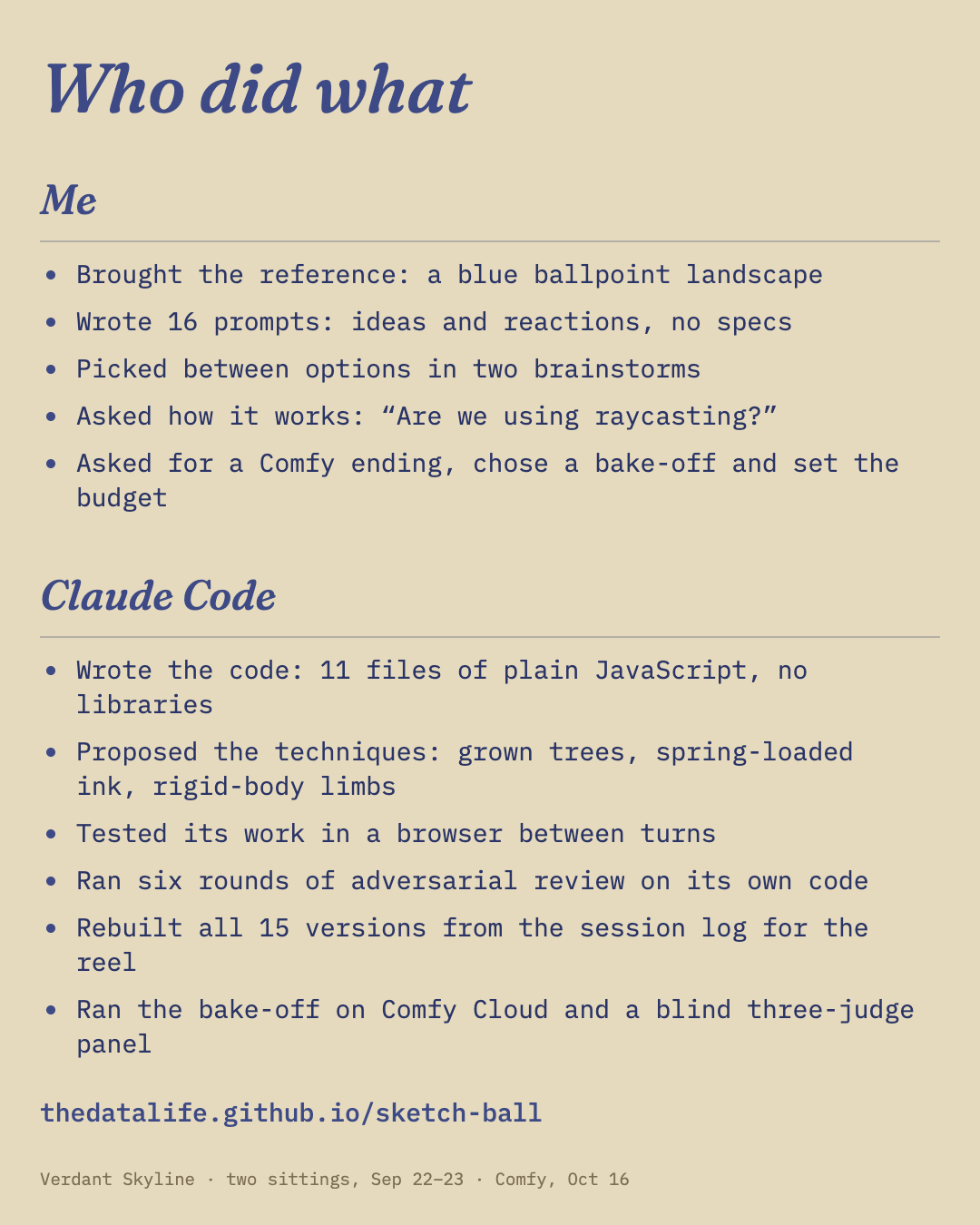
On who did what: I brought the reference, the reactions and the calls on what came next. Claude Code wrote the code, tested it in a browser between turns, ran six rounds of adversarial review on itself, and ran the Comfy bake-off and the judging.
The video is every version, v1 to v15, rebuilt from the session log, then the Comfy ending. The sketch is plain JavaScript with no libraries, under 200 KB. Links are in the first comment.
I'm curious how others are running this loop right now. Which part do you keep for yourself?